
Shares or stocks are a popular investment for many investors but can be intimidating when you are starting out. However, to invest successfully, it is important to first understand how investing works so that you can make the choices that are right for you. Before you get started it's important to lay some foundations that will be the building blocks for why you will choose certain investments.
First, you should know what are the benefits of investing?
Investing is more than building savings for a rainy day - savings is a sensible starting point because it provides the funds you need to purchase a range of different assets. However, investing goes one step further, helping you achieve personal goals with three significant benefits.
- The potential for healthy long term returns.
Investing means putting your money to work to potentially earn a better return over the longer term. Different classes of investment assets – cash, fixed interest, property and shares – typically generate different levels of return (which is relative to the risk of the investment). - Beat inflation
Inflation is the ongoing rise in the cost of living over time, and it can impact on our financial wellbeing. One way to help outpace inflation - and generate positive ‘real’ returns over the longer term - is by investing in assets that are not just capable of delivering higher income returns but also offer the potential for capital growth. - Earn additional income
It is possible to earn extra income by investing in quality investments. Some shares provide additional passive income through dividends that might be used as a source of regular extra income for day-to-day living. Or you might choose to reinvest the money to further grow (or compound) your wealth. Don't forget, there's also the capital growth made in the future when you do find it's time to sell your shares.
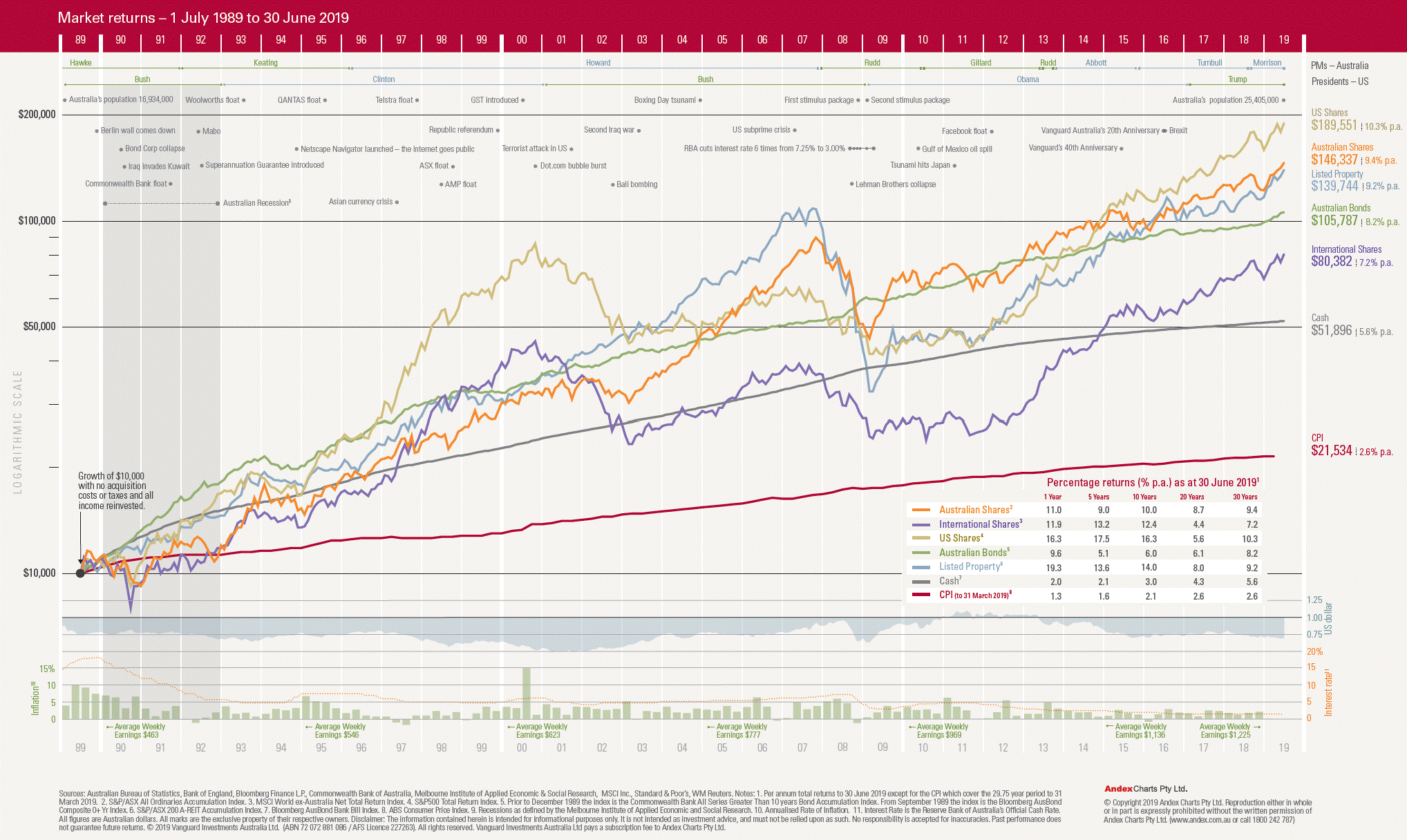
Source Vanguard
Once you have understood the fundamentals, next it's important to set some goals.
Some people have a very clear idea of what they want to achieve and how to get there. For others who are less certain, the first step to setting goals is to jot down a few ideas about what you would like to achieve over different time frames – the short (up to 3 years), medium (3-5 years) and longer term (over 5 years). As a rule of thumb, investing in shares is only facilities within long term strategy i.e. the shares you are investing will be reflecting to help you achieve goals in over five years time - this may include growing a deposit for a home, giving your children a quality education at your school of choice or enjoying a comfortable retirement.
Other things you would need to consider are your risk profile. All investments carry some degree of risk, and this is usually reflected in the potential return your money can earn. Lower returns are usually associated with a more secure, lower risk asset, meaning there is relatively less risk of losing your upfront capital. The higher the likely return, the greater the degree of risk that is likely to be involved. Your comfort level with risk is a very personal thing. It depends on your unique set of circumstances, including your age. For example, younger people, with longer-term goals and a long working life ahead of them, may have a higher tolerance for risk (as there is longer to potentially recover any market downturns). Older investors, and especially retirees, tend to be more risk-averse as they have fewer opportunities to replace the capital that may be lost when investments markets dip.
Once you feel comfortable and have assessed your investment road map, you can use this short guide to help your journey into investing in shares.
What are shares?
Shares, also called stocks, are a part ownership of a company and, if the company is publicly listed on a stock exchange, can be purchased or sold. Owning shares may mean you have certain rights, such as voting on major company changes or receiving a portion of company profits (known as dividends).
The value of a company’s shares can change and depends on a range of factors at any given time. Some of these directly relate to the company, such as how it is run, market share and profitability. Other factors may be more indirect and relate to the industry a company operates in, government regulations or even weather and environmental conditions.
Shares typically form part of a balanced investment portfolio, which may include other investments such as fixed interest, cash or physical assets.
You can own shares directly or indirectly, through managed investments like managed funds or your superannuation.
How to buy shares
Buying or selling shares directly can be done by:
- Having a broker or financial adviser to manage the shares on your behalf,
- Using an online trading platform,
- Investing in a managed account where a share portfolio is managed on your behalf.
You can also own shares indirectly by using managed funds.
- Investments which are pooled together with other investors and managed on your behalf.
- Exchange traded funds (ETFs) are offered on the share market and track the performance of a particular asset or index. They do this by holding the physical assets or shares, or invest in ways that exposes it to particular shares or assets without owning them directly.
- Managed funds are where you invest in a pool with other investors and you own ‘units’ in the fund which is managed according to a particular investment strategy. For example, many default superannuation funds use a variety of tailored managed funds to invest your money and provide you with access to shares and a range of other assets.
Tips for share investing
There’s more to owning shares than buying and selling. Here are some tips to help you invest.
1. Understand the quality and value of shares
The price of a share might not always match its actual value, so how do you know whether they are good value? Consider the company’s profit (current and expected in the future) as part of your assessment using sources like company websites, investment related websites and business articles. Some online trading platforms may also offer you their research covering measures like discounted cash flow (which considers future cash flows in today’s terms), Price-to-earnings (P/E) ratio which looks at share prices and earnings and Price-to-book (P/B) ratio which compares market value of the company to its value as listed in its accounting records.
2. Plan your investment approach
Your investment goals and expectations are an important factor in your decisions. For example, do you need to earn an income from the shares and require dividends? Do you have personal moral and ethical concerns you would like your shares to reflect? What timeframe do you have for investing?
3. Manage your risks
The likelihood of gaining or losing money from your share investment can change based on factors such as the company itself, the investment market and currency changes. Some strategies to help manage the risks include diversification (spreading your money across different companies, industries and regions), taking a long term approach allowing you to wait for market changes before selling or buying, or using an investment expert to assist you with a strategy. Shares are often considered a riskier investment due to the chance of losing your money so it is important to consider the risks alongside your circumstances and other investments.
Remember the administration
Any gains you make from your share investments, such as dividends or a gain from selling the shares compared to the original price you paid (also known as capital gains), count as part of your income, which then may be taxed. Stay up to date with the latest rules and regulations to ensure you are paying the correct amount of tax by researching yourself or having your financial advisor guide you.
You may also consider tax treatment of your investments within your overall strategy. For example, the gains on investments held in superannuation before you retire are taxed at 15%, while investments outside of superannuation are taxed at your marginal tax rate (which could be higher or lower, depending on your overall income). If you decide to use superannuation as part of your investment strategy, be aware of the limits to how much you can put in each year and that you may not be able to access your superannuation until your retirement age.
Some investors also factor the franking credits (also called imputation credits) offered by some Australian companies. Franking is where the company has already paid taxes on the dividends attributed to your shares. You are then able to claim credit for the taxes already paid as part of your tax return.
Next Steps
If you would like to learn more about shares and how to align them with your investment roadmap, meet with us, we're always ready to help you start.
This article was produced with reference to BT (click here to view the article).
Important information and disclaimer
The information provided in this document is general information only and does not constitute personal advice. It has been prepared without taking into account any of your individual objectives, financial solutions or needs. Before acting on this information you should consider its appropriateness, having regard to your own objectives, financial situation and needs. You should read the relevant Product Disclosure Statements and seek personal advice from a qualified financial adviser. From time to time we may send you informative updates and details of the range of services we can provide. If you no longer want to receive this information please contact our office to opt out.
FinPeak Advisers ABN 20 412 206 738 is a Corporate Authorised Representative No. 1249766 of Aura Wealth Pty Ltd ABN 34 122 486 935 AFSL No. 458254